
How to Switch Merchant Providers: UK Business Guide 2026
A lower transaction rate can still make switching merchant providers a costly mistake. If you’re researching how to switch merchant providers, the challenge isn’t simply finding a better quote. You also need to understand your current contract, protect your payment flow and keep settlements on track during the changeover.
It’s reasonable to be cautious. Notice periods and exit terms can be difficult to interpret, while headline rates rarely show the full cost or service conditions. Switching without a clear plan could leave you rushing to meet a deadline or dealing with avoidable payment disruption.
This guide sets out a practical sequence to follow before you commit. Learn how to review your agreement, compare providers on fees and service terms, and plan a changeover around confirmed readiness. The aim is to make an informed switch, not just a quick one.
Table of Contents
Why switch merchant providers, and what should you resolve first?
How to review your existing merchant agreement before switching
How to compare merchant providers beyond the transaction rate
How to switch merchant providers with less payment disruption
After switching merchant providers, verify payments and choose your next step
Why switch merchant providers, and what should you resolve first?
Make a change with a clear priority: keep customer payments available while moving to a provider that better fits your business. A lower transaction rate may prompt you to review your setup, but it’s only part of the decision. Service quality, contract terms, settlement arrangements and the work involved in changing systems matter too.
Start by identifying what prompted the review. You might be dealing with recurring service problems, changing business needs, unclear terms or separate systems that make payment information harder to manage. Write down the issue and how it affects daily operations. This helps you distinguish a one-off problem from an ongoing mismatch and gives you practical criteria for assessing alternatives.
When does changing merchant providers make sense?
Compare your current service with how you take payments now and expect to operate in future. Consider the support you need, how settlements fit your cash-flow processes, which payment channels you use, and whether your terminal and software work together. If a fault or delay is temporary, ask your provider to clarify or address it before deciding. If the same shortfalls repeatedly disrupt routine tasks, a change may be worth exploring.
What should you know before starting?
“Merchant services” can refer to connected parts of a payment setup, including acquiring, processing, terminals and software. A Payment service provider (PSP) can act as an intermediary between a business and banks, though responsibilities depend on the service arrangement. Map which organisations and agreements cover each part of your setup before planning a move.
Don’t assume your card machine agreement and merchant account terms are in one contract. They may be separate, with different notice requirements, equipment arrangements or end dates. Check the documents and confirm unclear obligations directly with your current provider. Switching doesn’t automatically cancel outstanding commitments or settle existing disputes, so identify these before giving notice or returning equipment.
There’s no single timetable for every business. Eligibility, notice periods, fees, onboarding and migration steps depend on your existing agreement and the prospective provider’s terms. Don’t choose a changeover date until you understand both sides of the arrangement. Compare the complete service, not just the headline rate, and resolve open questions before you commit. This groundwork makes the next steps more predictable without assuming the switch will be immediate or effortless.
How to review your existing merchant agreement before switching
Before committing to a new provider or giving notice, map out what your current agreement requires. Details may sit across several documents, so check the merchant account paperwork, terminal or equipment agreement, and any software or integration terms. Use this six-point review to clarify what needs to happen next.
1. Agreement: Find the parties named in each contract, the end date and any renewal provisions. Check whether related services have separate agreements.
2. Notice: Confirm how much notice is required, how to send it and which date counts as receipt. Ask your provider to confirm the process and relevant dates in writing.
3. Equipment: Check whether terminals are owned, rented or supplied under other terms. Ask what cancellation means for rental commitments, equipment returns and associated charges.
4. Settlement: Find out how pending payments will be settled and whether any balances or adjustments could remain after closure.
5. Integrations: List connected tills, POS software and other systems. Check whether ending the service affects access, data or transaction records.
6. Records: Save agreements, statements, reports and relevant correspondence. Keep written records of conversations, notices and dates agreed with your provider.
Which contract terms should you check?
Ask your provider to explain the end date, renewal terms and required notice method for each agreement. Don’t assume that cancelling card processing also ends terminal rental or software subscriptions. Request a written breakdown of any termination charges, outstanding balances, remaining rental commitments and equipment return requirements. These are details to verify, not costs or obligations to assume in advance.
Keep the response with your contract documents. If you discuss details by phone, note the date, who you spoke to and what they confirmed. Ask for written confirmation of important dates or amounts. This gives you a reliable reference as you plan how to switch merchant providers, rather than relying on memory or an informal conversation.
Which payment operations need attention?
Ask how the provider will handle pending settlements, refunds, disputes and chargebacks after the account closes. If you take recurring payments, check whether saved payment details or tokens can transfer to a new provider. Processes vary, so confirm what’s possible and what action you may need to take. Download reports and statements you’ll need before access to the existing dashboard changes.
As you assess providers, the Financial Conduct Authority explains how to check if a provider is authorised. Once your current terms and records are clear, compare replacement options against your operational needs. For example, review payment and POS options alongside the criteria that matter to your business.
How to compare merchant providers beyond the transaction rate
Compare each provider against the same checklist, using your own payment activity and business priorities. A quote is useful only if it covers comparable transaction types, services and contract terms. If a rate or condition is unclear, ask for an explanation in writing before deciding.
Use a table to keep the comparison consistent. Add a column for each provider and note the evidence behind each answer, such as a written quote or contract document.
How do you compare fees and contract terms fairly?
List every charge disclosed by each provider, including recurring fees, transaction charges and costs that apply only in specific circumstances. Then assess them against your own transaction mix, including the channels and card types your customers use. Don’t rely on an assumed industry average or compare a quote covering one service with another that includes more.
For a broader checklist, see this UK merchant services provider guide. The UK card machine rates comparison guide can also help you frame questions about pricing. Treat the quoted rate as one part of the total, then check how it fits the contract and services you’ll use.
Will the new provider fit your payment setup?
Check that the proposed arrangement supports the terminals, online payments, POS software and business integrations you rely on. Ask about settlement timing, support channels and onboarding requirements before signing. If you use connected systems, the integrated payment solutions guide can help you identify questions to raise.
Reliability means more than a sales promise. Ask how the provider handles issues affecting your payment channels and whether its support arrangements match your operating hours. Apply the same criteria to every option, including Dojo, and keep written answers beside your comparison. This makes how to switch merchant providers a decision based on fit, not just a headline rate.
How to switch merchant providers with less payment disruption
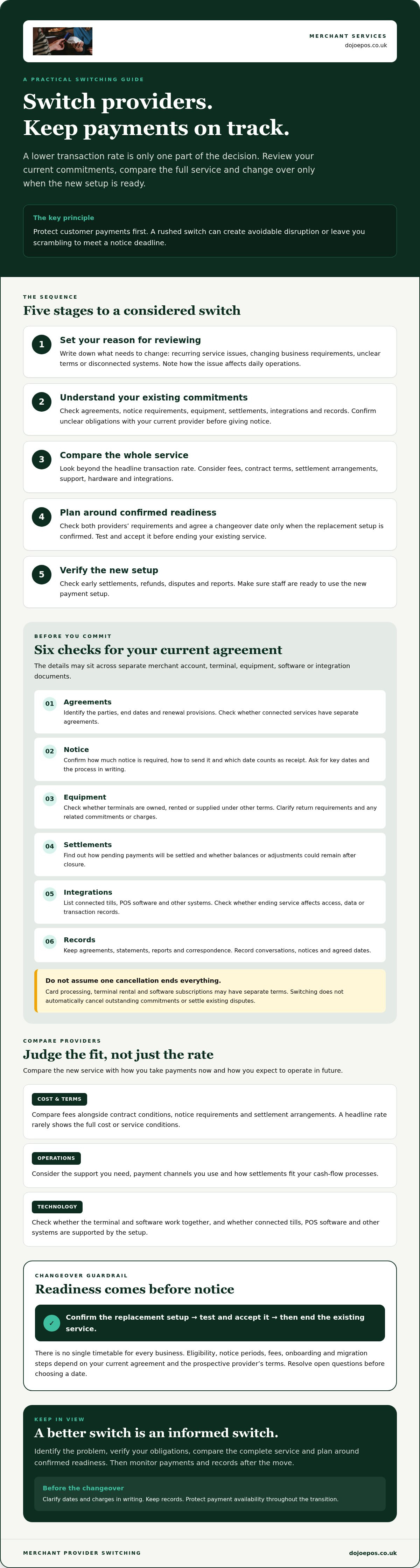
Plan the changeover around confirmed readiness, not an estimated delivery date or verbal assurance. Agree a target date only after the new provider confirms onboarding is complete and the required equipment, configuration and integrations are in place. Keep the current service active until the replacement has been installed, tested and accepted by the people who will use it.
A short transition checklist helps everyone stay aligned. Assign one person to coordinate the providers, staff and any technology partner, and record who owns each task. If the new setup isn’t ready, follow an agreed fallback plan rather than risk a gap in payment acceptance.
What should happen during onboarding and testing?
Provide accurate business information and respond to the new provider’s verification requests. Confirm who is responsible for terminal delivery, configuration, connectivity and any POS integration. Clarify what needs to be ready at your end and what the provider will complete before setting a firm changeover date.
Test the workflows your business relies on before switching live payments. Run representative transactions and check that the terminal or online flow completes, receipts are correct, transactions appear in reports and refunds can be processed. If systems are integrated, verify that transaction information reaches the right place. Ask the provider to resolve any failures, then retest and have relevant staff confirm they’re comfortable using the setup.
Prepare staff: Share concise instructions on the new process, where to get help and what to do if a payment doesn’t complete.
Update customer-facing details: Check any payment instructions, signage or online checkout information affected by the change.
Agree a fallback: Explain how staff should respond to a technical issue, including when to pause and contact support. Avoid retrying a payment until its status is clear, to reduce the risk of duplicate transactions.
When should you cancel the old service?
Follow the notice method and dates confirmed in your existing agreement. Keep evidence of any cancellation submission and related correspondence. Depending on your terms, you may need to give notice before the new setup is ready. Coordinate the effective end date with successful testing and the new provider’s confirmed activation. Don’t assume a new account automatically closes the old one.
Before the existing service ends, confirm how you’ll access final statements and reports, what happens to pending transactions, and how to return any equipment. Check how long account access will remain available and save the records you’ll need. This makes how to switch merchant providers a controlled operational change, with clear task owners and a fallback if plans shift.
If you’re assessing a new payment setup, explore Dojo’s payment and POS options against your business requirements before deciding whether they’re the right fit.
After switching merchant providers, verify payments and choose your next step
A successful changeover still needs to be checked against real trading activity. Reconcile early settlements with your transaction records and investigate differences promptly rather than assuming they’ll correct themselves. Compare settlement dates and amounts with the provider’s statements, noting any fees or adjustments shown. If an item doesn’t match, gather the relevant transaction details and raise it through the provider’s confirmed support route.
What should you check in the first weeks?
Use your normal operating routine to test the new setup beyond the initial installation. Confirm that sales and refunds are recorded correctly, staff can complete end-of-day tasks, and the right people can access reports and account information. Check how disputes and chargebacks are handled, and make sure staff know where to find the process. If an issue remains unresolved, follow the provider’s stated escalation route and record the case and its progress.
Look for patterns, not just isolated errors. Compare transaction totals and settlement records across different trading days, and check that refunds appear in the relevant reports. Ask staff whether taking payments or closing a shift is confusing. Their feedback may reveal practical problems that a technical test misses.
How can you assess Dojo as a potential provider?
Use the requirements you documented earlier to assess Dojo, just as you would any provider. Compare Dojo Go and Dojo Pocket with your terminal needs, and consider whether Blinq POS software or integrated payments suit your existing setup. These are options to investigate, not a guarantee that every product or service will suit your business. Ask Dojo to confirm current capabilities, fees, contract terms, onboarding steps and service availability before deciding.
Once the new arrangement is stable, revisit your comparison if your payment channels or operating needs change. Adding online payments, adjusting how staff take payments or connecting different business systems may change what matters most. Keep your provider terms, support routes and reporting processes accessible so you can review them without starting from scratch.
If Dojo meets your documented requirements, explore Dojo payment solutions and confirm the details relevant to your business. The same disciplined approach that helps you understand how to switch merchant providers can guide future decisions: verify the service, test the workflow and check the terms before committing.
Make your next payment provider move with confidence
Switching merchant providers works best as a planned change, not a rush to secure a lower rate. Review your current agreement and confirm notice, equipment and account obligations before committing. Then compare the complete service and contract terms, test the new setup and check settlements once payments move across.
If you’re weighing up your options, assess Dojo against your documented business requirements. Dojo is a UK payment provider offering card-present and online payment solutions, including card machines, Blinq POS software and integrated payments. Confirm current capabilities, fees and terms directly before deciding whether they fit your setup.
With a clear plan and the right checks, you can make how to switch merchant providers a more controlled step towards a payment setup that supports your business.
Frequently Asked Questions
How do I switch merchant providers?
Start by checking your existing agreements for notice requirements, end dates, equipment terms and outstanding commitments. Compare prospective providers on the complete service, including fees, settlement, support, hardware and integrations. Confirm onboarding and setup with your chosen provider, then install and test the new system before ending the old service. Follow its confirmed cancellation process, keep written records and reconcile early settlements after the changeover.
Can I switch merchant providers before my contract ends?
You may be able to, but check your contract and confirm the position directly with your current provider before committing. Early cancellation could involve notice requirements, charges, remaining equipment rental or other outstanding commitments, depending on your agreement. Ask for the relevant terms and any amounts in writing. Compare these with the prospective provider’s onboarding and contract terms to decide whether switching early makes sense for your business.
How long does it take to switch merchant providers?
There’s no single timetable. The switch depends on your current notice period, the new provider’s onboarding and verification process, equipment delivery, configuration and any POS or business system integrations. Ask the prospective provider to confirm the steps and expected timing for your setup, then compare that with the cancellation date confirmed by your existing provider. Set a changeover date only when you understand both timelines and have allowed time for testing.
Will switching merchant providers disrupt card payments?
It can, if the old service ends before the replacement is ready, but careful sequencing helps reduce avoidable disruption. Keep your current service active until the new setup is installed, tested and accepted. Check representative sales, receipts, refunds and reporting, and make sure staff know the process and how to respond to technical issues. Agree a practical fallback with your team before moving live payments rather than assuming the changeover will be seamless.
Can I transfer saved card details or recurring payments to a new provider?
Possibly, but transfer options depend on the providers, systems and arrangements involved. Before signing, ask both your current and prospective provider whether saved payment details or payment tokens can be transferred, what steps are required, and whether customers need to take any action. Confirm how recurring payments will be handled during the changeover. Don’t assume stored details will move automatically, and plan how to manage payments that can’t be transferred.
What should I compare when choosing a new merchant provider?
Compare the full service, not just the advertised transaction rate. Review recurring and transaction-based charges, contract length and exit terms, settlement arrangements, support channels, hardware, onboarding and integrations. Use your own transaction mix to assess costs, and check that quotes cover like-for-like services. Ask for written clarification wherever a fee, condition or support arrangement is unclear. A comparison table makes differences easier to spot and records each provider’s answers.
Do I need to tell customers when I change merchant providers?
It depends on whether the change affects how customers pay or manage an ongoing payment. If your checkout, payment instructions or recurring payment process changes, provide clear information before customers need to use the new arrangement. For a change customers won’t see, a general announcement may not be necessary, but check your customer communications and service commitments. Make sure staff can explain any visible changes and direct customers to the right payment process.


Comments