
Next-Day Payment Settlement: A Merchant’s Guide to Faster Cash Flow in 2026
A payment can be complete at the till and still leave your cash out of reach when you need to reorder stock or run payroll. That gap is why next day payment settlement matters: it can bring sales revenue into your account sooner, giving you more control over day-to-day cash flow.
If settlement delays make it hard to plan, you may be wondering why getting paid takes so long and what “next day” really means. This guide explains how settlement works, what can affect its timing, and what to check about weekend and bank holiday payments or extra charges. You’ll also learn how to compare standard, next-day and instant settlement without confusing faster access with a free upgrade.
We’ll cover batching and cut-off times, practical questions to ask providers, and how Dojo’s Next-Day Transfers fit into a payments set-up. Dojo offers Dojo Go and Dojo Pocket terminals, alongside Blinq POS software. Use the details here to plan around your cash flow and decide whether next-day settlement suits your business.
Table of Contents
What is next day payment settlement and why does it matter?
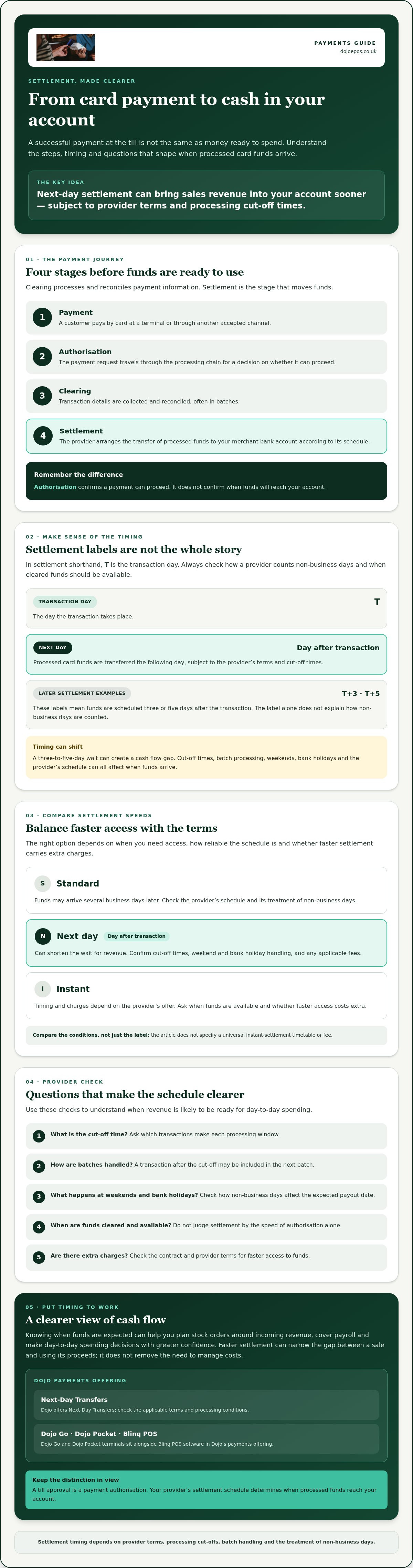
Next day payment settlement is the transfer of processed card funds to a merchant’s bank account on the day after a transaction, subject to the provider’s terms and processing cut-off times. It can shorten the wait for revenue compared with arrangements where funds arrive several business days later. In settlement shorthand, T is the transaction day: T+3 means funds are scheduled three days later, while T+5 means five days later. Check how a provider counts non-business days, because the label alone doesn’t tell you exactly when money will be available.
Settlement timing affects how confidently you can manage cash. If you’ve made sales but the funds haven’t arrived, you may have less flexibility to replenish popular stock, cover payroll or respond to a shift in demand. Faster access can help you plan supplier orders around incoming revenue and avoid delaying purchasing decisions until cash clears. It won’t remove the need to manage costs, but it can narrow the gap between making a sale and using its proceeds.
The True Cost of Delayed Payments
A three-to-five-day wait can create a cash flow gap, particularly for a small business balancing regular bills with unpredictable sales. Revenue may be recorded, but it isn’t yet available to spend. That uncertainty can add pressure when wages or supplier invoices are due. A reliable settlement schedule makes it easier to plan, although you should still check the provider’s terms for weekends, bank holidays and cut-off times.
Settlement vs. Authorisation: Understanding the Difference
A successful beep at the till confirms an authorisation, not a completed transfer to your bank. During authorisation, the cardholder’s bank checks the payment request and approves or declines it. The card scheme, such as Visa or Mastercard, helps route messages between the parties in the payment system. The funds still need to move through later processing stages before they reach your account.
Settlement is that later stage: processed transactions are reconciled and funds are transferred through the payment chain to your merchant bank account. Delays can arise if transaction batches are submitted after a cut-off or the provider’s settlement schedule takes longer. So don’t judge a service by authorisation speed alone. Ask when cleared funds should be available and what conditions affect that timing.
If your business uses Dojo Go or Dojo Pocket with Blinq POS, understanding each stage helps distinguish a successful card payment from money ready to use. Next day payment settlement brings those two moments closer, supporting clearer decisions about stock, staffing and day-to-day spending.
The Mechanics of the Modern Settlement Cycle
A card payment moves through several stages before the proceeds appear in your bank account. The key distinction is this: clearing processes and reconciles payment information; settlement moves the funds. Timing depends not only on authorisation, but also on how the provider handles each stage and when it releases the payout.
Payment: A customer pays using a card at a Dojo Go terminal or through another accepted channel.
Authorisation: The payment request travels through the processing chain for a decision on whether the transaction can proceed.
Clearing: Transaction details are collected and reconciled, often in batches.
Settlement: The provider arranges for processed funds to be transferred to your merchant bank account according to its schedule.
The exact arrangements depend on the provider and your contract. Dojo offers Next-Day Transfers, with Dojo Go and Dojo Pocket terminals and Blinq POS software as part of its payments offering. Ask how transactions move through the process and when payouts are released. A terminal approval confirms that a payment can proceed; it doesn’t, by itself, confirm when funds will reach your account.
The Role of the Acquiring Bank
The acquirer, or acquiring bank, connects the merchant’s payment processing with the card scheme and the customer’s card issuer. It helps manage the flow of transaction information and funds towards the merchant’s account. Acquirers’ systems and operating processes can affect how quickly transactions are reconciled and payouts released. During settlement, the acquirer helps mitigate risk by checking and reconciling payment information before funds are transferred.
Cut-off Times and Batch Processing
Many providers group a day’s transactions into a batch before processing them for settlement. The cut-off determines which transactions make that processing window. For example, if the cut-off is 10 pm, a sale processed later may be included in the next batch. Providers set different schedules, so confirm the cut-off that applies to your account and how it affects the expected payout date.
Build the cut-off into your close-of-day routine. Review transactions, complete any required end-of-day steps and check how late sales are handled. Blinq POS can support day-to-day payment and sales management, but confirm which reconciliation features are included in your set-up and how they align with your provider’s reports.
Once a provider releases a payout, bank transfer infrastructure carries it to the merchant’s account. Faster Payments is a UK payment system, but don’t assume your card provider uses it for every payout or that it determines the processing schedule. Confirm the transfer method, cut-off and expected arrival time with your provider. To explore Dojo’s payment set-up, see its payment and POS solutions.
Comparing Settlement Speeds: Next-Day vs. Standard vs. Instant
Settlement speed affects how soon sales revenue is available, but faster isn’t automatically better for every business. Compare the timing, conditions and charges behind each option. The labels below are useful shorthand: providers’ cut-off times, processing schedules and contract terms determine when funds actually arrive.
T+0, instant: Funds may arrive within seconds or minutes, depending on the service and eligibility. Check for transfer fees, limits and other conditions before relying on it.
T+1, next-day: Processed funds are transferred the following day under the provider’s terms. This can offer a practical balance between faster access and predictable planning.
T+3, standard: Funds are scheduled for a later business day. This can mean a longer wait to use sales revenue, particularly when a weekend or bank holiday affects the schedule.
Across merchant services UK, quicker settlement is often part of the conversation, but don’t assume T+1 is the universal standard. Compare providers on the payout schedule they actually commit to, not just a headline label. Next day payment settlement can narrow the gap between making a sale and using the proceeds, while giving you more time to plan stock orders and other regular outgoings.
Is ‘Instant’ Settlement Worth the Extra Cost?
Instant or on-demand transfers can help when cash is needed urgently, but some providers charge extra for the option. Check whether fees apply per transfer or as a percentage, and whether there are limits or eligibility rules. For many retail and hospitality businesses, next-day access may be a more cost-effective fit for routine cash flow. Businesses processing high volumes should also confirm how batches, cut-offs and payout exceptions are handled, since speed alone doesn’t guarantee a predictable process.
The 7-Day Settlement Reality
Weekend trading can create a Monday-morning cash gap if a provider only processes payouts on working days. Ask specifically whether Saturday and Sunday sales, as well as bank holidays, are included in the schedule, and when those funds will reach your account. Dojo’s Next-Day Transfers are available by 7 am, including weekends and bank holidays, at no additional fee during the first year on a qualifying 12-month contract. After the first year, a paid upgrade is required for weekend and bank holiday settlements. Check your contract for the terms that apply to your account.
If you use Dojo Go or Dojo Pocket with Blinq POS, plan around the settlement schedule in your agreement rather than assuming every transfer follows the same timeline. Predictable payouts can make it easier to plan after a busy weekend, but the details matter: verify cut-off times, eligibility and any upgrade conditions before building them into your cash flow routine.
Choosing a Provider for Fast Settlement: A Merchant's Checklist
A next-day promise is only useful if the terms explain when funds arrive, which transactions qualify and what could delay them. Before you sign, compare the written settlement schedule with your trading pattern. A checklist helps you look beyond the headline and assess the whole set-up, from fees to payment hardware and support.
Scrutinising the Small Print
Read the settlement clauses closely and ask the provider to explain any wording that doesn’t give you a clear payout expectation. “Subject to bank processing times”, for example, may mean the arrival time depends on factors outside the provider’s stated schedule. Don’t assume one settlement promise covers every card type or trading day.
Fees: Ask whether next-day transfers cost extra, whether charges differ by payment type, and whether other account or processing fees apply.
Eligibility: Confirm whether the timing applies to all the card types you accept, including international cards, or only certain domestic transactions. Check for minimum volumes or other conditions.
Timing: Get the cut-off time in writing. Ask how late transactions, weekends and bank holidays affect the payout date.
Support: Find out how to report a missing or delayed settlement, when support is available, and whether UK-based assistance is offered if that matters to your business.
For more context on payment costs, review this guide to Dojo card machine rates, then compare the relevant terms with your own agreement. Don’t assume a published overview replaces the contract.
Check the Hardware and EPOS Fit
Your terminal, EPOS and settlement reporting should work together in a way that makes sales and payouts easy to check. Explore what to look for in electronic point of sale hardware, then ask a prospective provider how its equipment connects to your payment records and which reconciliation steps remain manual.
Automated reconciliation can reduce repetitive admin, but confirm exactly what the software matches and what your team still needs to review. Ask how Blinq POS works alongside Dojo Go or Dojo Pocket in your proposed set-up. Don’t assume an end-of-day workflow or reporting feature without checking what’s included. Dojo provides Next-Day Transfers, but your contract determines the conditions that apply. If you’re comparing options, explore Dojo’s payment and POS solutions and check how they fit your business’s settlement needs.
Maximising Your Cash Flow with Dojo Next-Day Transfers
Faster access to card revenue can make everyday planning easier, from deciding when to replenish stock to preparing for payroll. Dojo offers Next-Day Transfers as part of its payments offering. Check your agreement for the conditions that apply: weekend and bank holiday settlement may depend on your contract, and eligibility terms can vary.
Dojo serves over 110,000 businesses worldwide. Its payment offering includes Dojo Go and Dojo Pocket terminals and Blinq POS software, alongside Next-Day Transfers. When comparing providers, look at the settlement terms and the payment tools together, then check how the arrangement fits your trading and cash flow needs.
Dojo Go and Dojo Pocket: Built for Speed
A terminal captures and transmits transaction details for processing, but the device alone doesn’t determine when money reaches your account. Settlement also depends on batching, provider cut-off times and the terms of your account. When assessing Dojo Go or Dojo Pocket, ask how transactions are submitted, what happens to late sales, and how the expected payout timing is communicated.
Ease of use matters during a busy shift, too. Staff need a clear routine for processing payments and checking the day’s activity, particularly in hospitality environments where service pressure can rise quickly. Confirm how the terminal fits your team’s end-of-day process and what steps are required to reconcile sales. Check product details for any connectivity, durability or interface features that matter to your intended use.
The Blinq POS Advantage
Blinq POS software supports the wider payments set-up, giving merchants a way to manage sales alongside their payment tools. Integrated payments can help keep transaction records connected across the sales process, but they don’t remove the need to review reports or resolve mismatches. Ask how your configuration records transactions, supports reconciliation and relates sales totals to settlement reports. This helps you spot differences promptly and plan cash flow using clear information, without confusing recorded sales with funds already received.
Next day payment settlement works best when you understand the whole process, from the terminal and transaction batch through to the payout schedule. Confirm the cut-off, weekend and bank holiday terms, and any conditions that apply before relying on a particular arrival time. For a payments set-up with Dojo Go, Dojo Pocket, Blinq POS and Next-Day Transfers, explore Dojo’s payment solutions.
Put More Control Back into Your Cash Flow
Settlement speed matters because a card authorisation isn’t cash in your account. Knowing your provider’s cut-off times, payout schedule and weekend terms helps you plan stock, payroll and other costs with greater confidence. The right next day payment settlement arrangement should fit your trading pattern, not just sound fast on paper.
Dojo offers Next-Day Transfers alongside Dojo Go and Dojo Pocket terminals and Blinq POS software. Check your contract for the settlement conditions that apply, including any terms for weekend and bank holiday transfers.
Ready to explore a payments set-up? Explore Dojo’s payment solutions and Next-Day Transfers to see how they could fit your business.
Frequently Asked Questions
What is the difference between next-day settlement and next-day clearing?
Next-day clearing means payment transactions are processed and reconciled the following day; next-day settlement means the funds are transferred to your merchant bank account by then. The terms are related, but they describe different stages. A card payment can be authorised and later cleared without the proceeds being available in your account yet. Ask your provider what it means by “next day” and when funds should be accessible.
Does Dojo offer next-day settlement on weekends and bank holidays?
Dojo offers Next-Day Transfers by 7 am, including weekends and bank holidays, without an additional fee during the first year on a qualifying 12-month contract. After the first year, a paid upgrade is required for weekend and bank holiday settlements. Check your own contract to confirm which terms apply, as eligibility and settlement arrangements can vary. This helps you plan around weekend trading without assuming every account has identical terms.
Are there extra fees for next-day payment transfers?
Dojo Next-Day Transfers have no additional fee during the first year for customers on a qualifying 12-month contract. After that first year, a paid upgrade is required for weekend and bank holiday settlements. Other contract terms may affect what applies to your account, so check the agreement for transfer conditions and any relevant charges. Ask the provider to clarify which settlement features are included before you compare overall costs.
What is the cut-off time for next-day settlement with Dojo?
Check your Dojo agreement or ask Dojo directly for the cut-off time that applies to your account. The exact cut-off isn’t stated here, so don’t rely on a general time quoted for another provider or contract. A batch submitted after a provider’s cut-off may be processed in a later window. Confirm how late transactions, weekends and bank holidays affect your expected payout date.
Do I need a specific type of bank account for next-day transfers?
Confirm the account requirements for your Dojo Next-Day Transfers with Dojo before setting up or changing your payout details. Ask whether the account must meet particular criteria, and whether the account name and details need to match your merchant account. Also check how long any account change takes to verify, so you can avoid disrupting expected settlement while the details are being updated.
Why has my settlement been delayed even though I have a next-day contract?
A next-day contract doesn’t necessarily mean every transaction arrives the next calendar day in all circumstances. A late batch, cut-off time, bank holiday, account-specific eligibility term or processing issue may affect timing. Check the transaction date, the provider’s settlement schedule and whether the payment appears in the relevant batch. If the funds arrive later than the agreed window, contact your provider with the transaction and payout details to help identify the cause.
Can I get next-day settlement for American Express transactions?
Confirm Amex eligibility directly with your provider and check your contract. Dojo Next-Day Transfers eligibility for American Express transactions isn’t confirmed here, so don’t assume the same schedule covers every card type. Ask whether Amex payments follow the same cut-off and payout timetable as other card transactions, and whether separate terms apply. This is especially useful if Amex makes up a regular part of your sales.
How does next-day settlement help with my business VAT and tax planning?
Next-day settlement can give you a clearer view of incoming cash, helping you plan for VAT, tax and other business outgoings. It doesn’t change your tax obligations or determine when a payment is due. Keep settlement records separate from sales and tax records, since a payout date may differ from the date of sale. For advice on reporting, deadlines or how to prepare, check current HMRC guidance or speak to a qualified accountant.


Comments